
CUSTOM ASSEMBLY
Custom GH-style wire harnesses for compact signal connections
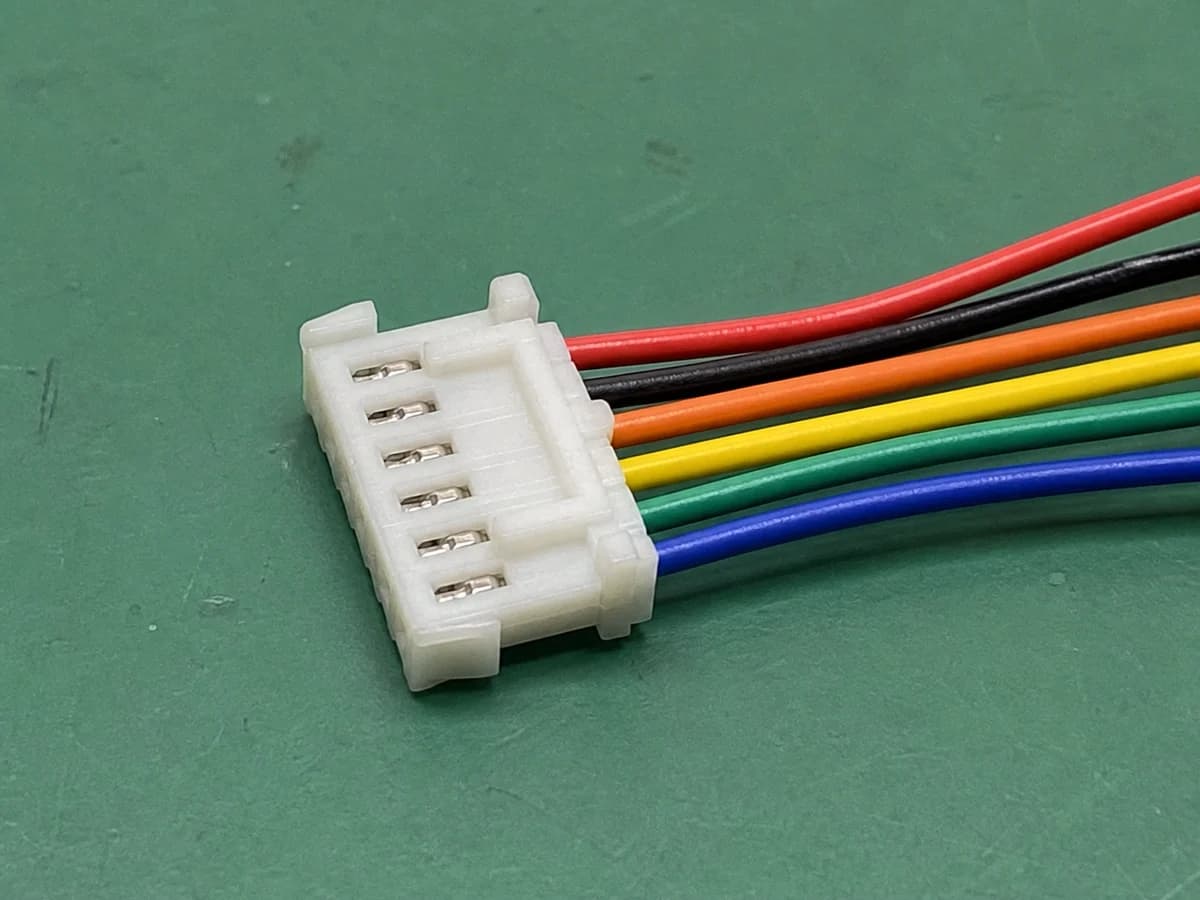
- Use
- Signal wiring in equipment with limited installation space.
- Construction
- Specified compact housing with populated cavities and controlled wire exits.
- Selection focus
- GH-style interface, occupied cavities and strain relief.
PRODUCT CONFIGURATION
Interfaces, construction and specifications
Match the assembly type first, then confirm project values. These configuration details guide selection; the approved drawing defines final materials, dimensions and ratings.
- Interfaces & terminations
- GH-style compact signal interface; confirm housing, contact and installation clearance.
- Wiring & dimensions
- Pinout, occupied positions, wire colours and finished lead lengths.
- Assembly construction
- Crimped leads with stripped, tinned or terminated opposite ends, as specified.
- Conductor & materials
- Specify conductor size in AWG or mm², conductor construction, insulation and jacket part numbers. Selection must match the terminals; see the material guide below.
- Temperature & validation
- State operating temperature and fixed or moving installation. Assembly ratings, test conditions and records depend on the selected materials and construction.
Project scope and product notes
Signal leads for space-constrained electronic equipment. GH-style interfaces can be reviewed when specified; the housing, contacts, position count and pitch follow the confirmed project documents. Start with a drawing, sample photos or an existing assembly brief to identify the interface, wiring and open questions before the quotation scope is confirmed.
The image illustrates an assembly type. Confirm the interface, positions, length and inspection for the project; undecided RFQ details can remain open.
Additional product technical notes
- Interface review
- GH-style interfaces can be reviewed when specified; the housing, contacts, position count and pitch follow the confirmed project documents.
- Customization
- Confirm pinout, wire gauge, colors, length, exit direction and end preparation for the project.
- Inspection scope
- Define sample and production requirements for continuity, polarity, contact retention and visual inspection.
Which board-to-wire lead matches your project?
| Interface reference | Application focus | Check first |
|---|---|---|
| XH-style leads | PCB header to product wiring | Mating header and opposite wire ends |
| PH-style leads | Internal routing around a board and enclosure | Header clearance, wire bends and assembly access |
| GH-style leads | Signal wiring in limited installation space | Occupied cavities, wire exit and strain relief |
Applications can overlap. A series name does not replace a part number: match the housing, contacts and board header, then verify pitch, position count and installation dimensions.
APPLICATIONS
FAQ
What matters when installation space is limited?
Show the mating connector, available clearance, wire exit direction and strain-relief location. A compact housing alone does not establish a safe routing or bend allowance.
Does a GH-style name confirm mating compatibility?
No. Provide the specified housing, contact and mating-header part numbers or measurable interface details. Confirm fit and pinout during sample review before releasing the assembly.
REQUEST A QUOTE
Send the requirement for Compact Signal Wire Assemblies
Send the information you have. Mark undecided details as open; the first review identifies what is needed for quotation or sampling.
Information useful for this assembly
- Application and installation space
- Interface part numbers, or mating-face and wire-entry photos with dimensions
- Pinout, wiring, length and end preparation
- Quantity tiers; mark undecided details as open
- Sample and production tests, identification and packaging