Published by Yuefu Electronic
Crimp inspection planning matrix
| Item | Review points |
|---|---|
| Visual | Check conductor position, insulation support and damage against the selected terminal specification. |
| Dimensions | Specify crimp height/width, measurement method and tooling combination. |
| Mechanical | Agree pull-force and cross-section checks, sample quantities and acceptance criteria. |
| Electrical | Define continuity, shorts and any other required electrical checks separately. |
A crimped terminal provides a mechanical and electrical connection within a harness. Poor termination can cause high resistance, loss of retention or intermittent contact under movement. Defining the applicable checks is part of a complete assembly specification.
Crimp quality is not a single number. It is a combination of visual criteria, dimensional checks, and functional tests, and each one should be agreed with the factory before production rather than assumed.
Visual checks come first
A good crimp starts with the wire and terminal prepared correctly. Check that the strip length matches the terminal so the conductor reaches the crimp barrel without being caught by the insulation crimp, and that no strands are cut, nicked, or left outside the barrel.
Check the insulation support as well as the conductor crimp against the terminal application specification. Confirm the required support geometry, conductor position and limits for insulation damage. Acceptable forms differ between terminal designs; a generic appearance rule is not a substitute for the selected contact's criteria.
Crimp height and width
Use the applicable terminal application specification for the approved wire size and construction to establish crimp-height limits and the measurement method. A visually acceptable sample or one favorable cross-section must not substitute for the manufacturer's requirements. Any alternative limits need an approved engineering basis.
The important point for an RFQ is that crimp height should be a controlled dimension with a value agreed in advance, not something decided on the day. If the customer has an approved terminal application specification, send it with the RFQ.
Pull-force and cross-section checks
Pull-force (tensile) testing checks how firmly the terminal grips the conductor. It is a destructive test, so it is normally done on samples or on a defined number of pieces per lot rather than on every part.
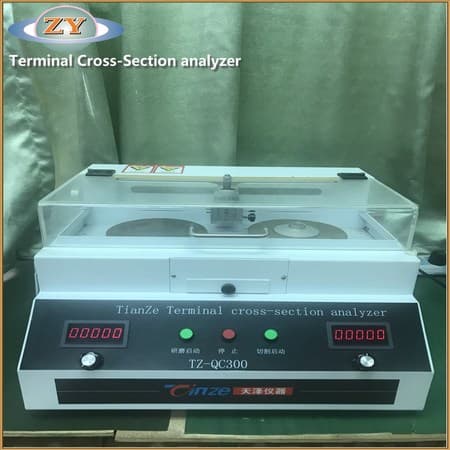
Cross-section analysis reveals internal features at the prepared cut plane, including strand distribution, barrel formation and voids. Interpret the section against the applicable crimp specification. It complements dimensional, mechanical and electrical checks; one section is not proof of the entire production lot.
Both checks need a defined sample rate and acceptance criteria. If these tests are part of your requirement, state the method, the sample quantity, and what happens when a result falls outside the agreed range.
Continuity and electrical testing
Electrical continuity and short testing catch the faults visual checks miss, such as a strand touching an adjacent cavity or a missing contact. State whether the test is done on every assembly or on a sampling plan, and which circuits are covered.
For a custom wire harness, the inspection combination that fits your product — visual, dimensional, pull-force, cross-section, and continuity — should be written into the RFQ or the inspection plan. A clear quality clause lets the factory quote the actual inspection work instead of assuming a generic level, and it gives both sides the same definition of an acceptable termination.
From crimp quality to a production RFQ
Crimp height, pull-force, and continuity only become quoteable when they are attached to a specific assembly. Send the terminal application specification if you have one, the wire size, the connector or terminal part numbers, and whether the checks are first-article only or lot-based. If the crimp sits in a housing that still needs routing or strain-relief review, include that drawing as well.
A connector assemblies brief is the right place to confirm the housing, contact, and exit together with the crimp method. Use the same package for a connector assembly and custom wire harness quotation so inspection work is priced once. Attach the drawing, terminal data, and the checks you require through Request a Quote.
The How to Prepare a Wire Harness RFQ guide covers the rest of the information that speeds up an OEM quotation.
Put the inspection result in context
Record terminal part number, wire specification, tooling identity, setup or lot reference, test method and result. The same pull-force value is not a universal limit across different contacts and conductors. For pull testing, specify how insulation support is treated so results remain comparable. TE's crimp-height guidance explains why crimp evaluation needs more than one measurement.
After a tool adjustment, material change or out-of-limit result, define which pieces are held and what checks are needed before restart. A continuity pass can coexist with a mechanically weak termination. Keep the inspection plan linked to the production-release record, including the agreed handling of failed samples.